
Chr Hansen
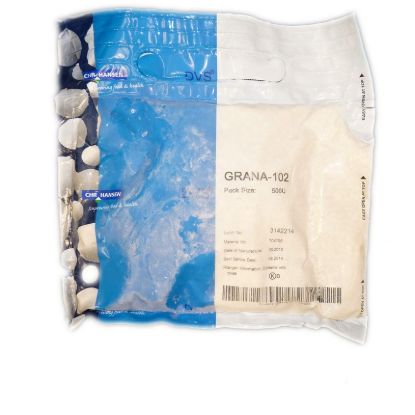
GRANA-102 Frozen 500 u
This Chr.Hansen DVS® culture contains defined thermophilic and mesophilic strains and is for continous direct vat set use.
The culture provides fast lactic acid production, high phage robustness and a profound flavor and texture contribution.
The culture is primarily applied in the production of hard cheese varieties (e.g.Parmesan, Reggianito, Sardo, Goya and Roomy), which are characterized by a compact and granular texture.
The culture provides a complex, mature cheese flavor with sweet, fruity and nutty notes.

LH-32 Frozen 250 u
Defined thermophilic lactic acid culture.
The culture enhances the overall flavor intensity of the cheese by accentuating important flavor notes, and especially nutty flavor.
The culture is primary applied in the production of Italian and Swiss cheese varieties.
The culture can be applied alone or in combination with other lactic cultures, e.g. Streptococcus thermophilus and Lactobacillus delbrueckii subsp.bulgaricus and LD culture.
LH-B03 Frozen 500 u
Defined thermophilic lactic acid culture.
The culture enhances the overall flavor intensity of the cheese by accentuating important flavor notes.
The culture is primarily applied in the production of pizza cheese as well as Italian and Swiss cheese varieties.
The culture can be applied alone or in combination with other lactic cultures, e.g. Streptococcus thermophilus and Lactobacillus delbrueckii subsp.bulgaricus and LD culture.
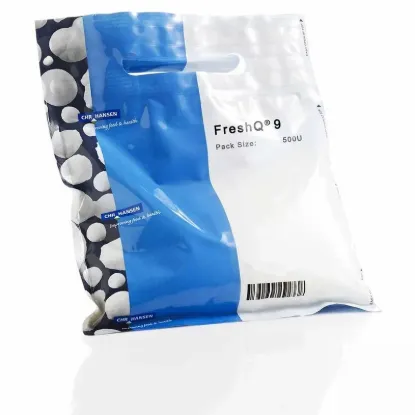
FreshQ 9 Frozen 500 u
The FreshQ® cultures are combinations of traditional lactic acid bacteria that deliver inhibition of unwanted yeast and moulds in fermented dairy products.
The effect is obtained through active participation in the natural fermentation.
The cultures are developed for application in yogurt.
$222.60
PS-4 Frozen 500 u
Selected propionic acid bacteria culture.
The culture is primarily used for the production of Swiss-type cheeses, such as Emmental, Gruyère, Greve and similar types where the typical propionic acid aroma and eye formation are desired.
The culture is normally applied in combination with lactic cultures, such as Streptococcus thermophilus , Lactobacillus helveticus , Lactobacillus delbrueckii subsp.bulgaricus and LD cultures.
The culture ferments lactate resulting in the formation of propionic and acetic acids and large amounts of carbon dioxide.
Propionic acid cultures grow slowly in milk and have a low proteolytic activity.
$172.74